

Wednesday, Apr 8, 2026
The technology gives student broadcasters new skills and expands their career-ready experience
by Adam Grybowski
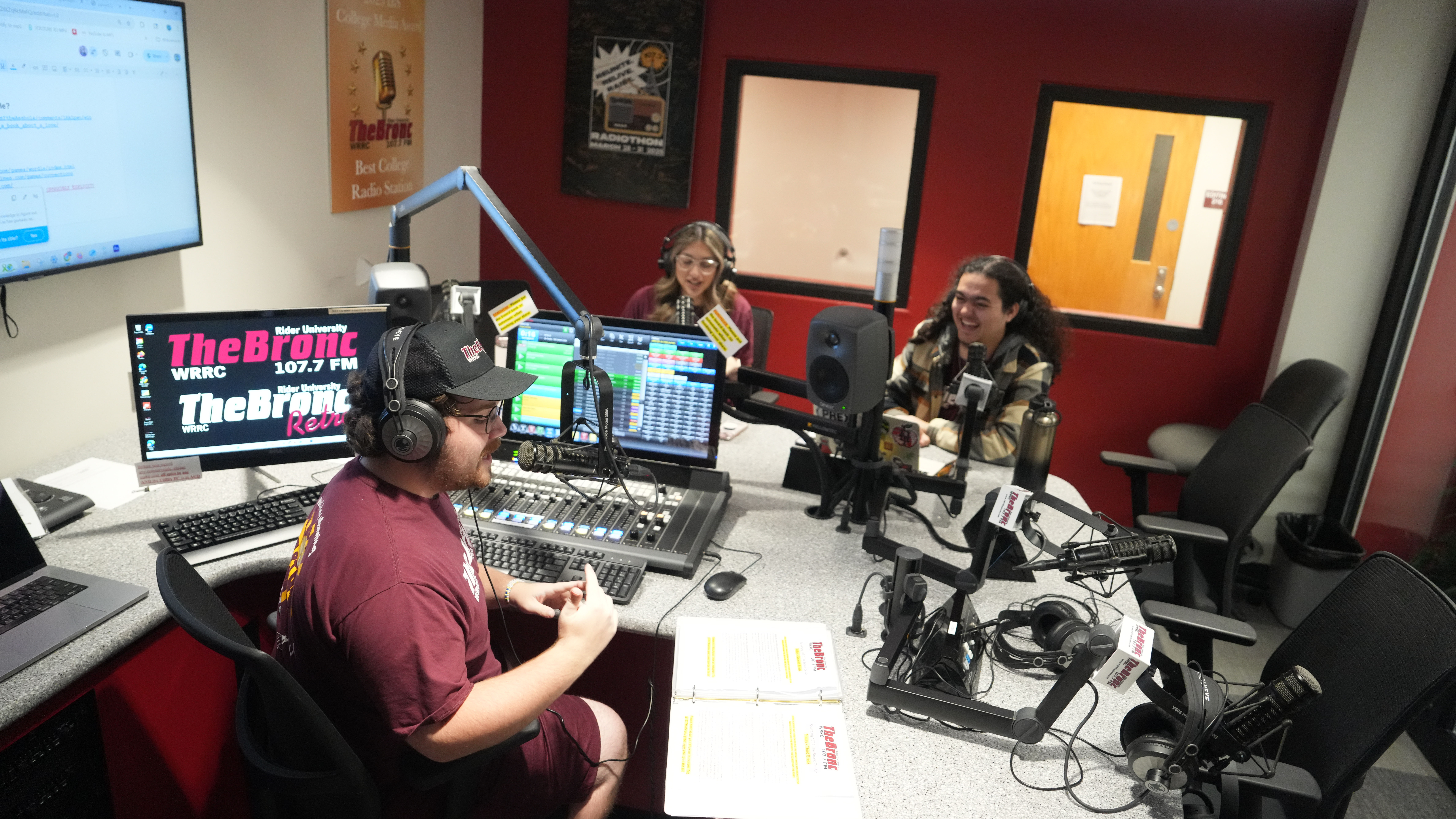
This semester, Rider University's student-run radio station added the ability to broadcast its shows in video, embracing a new format that represents one of the most significant changes in radio and podcast distribution over the past several years.
With the installation of iMediaCam, a fully automated video production system, 107.7 The Bronc can now combine radio production with professional video streaming. The move creates the potential for the radio station to expand its audience reach across multiple platforms and increase its revenue through ads and sponsorships.
"Radio has always embraced new media," says John Mozes, the general manager of 107.7 The Bronc and the executive director of Rider's recently launched Student Media Center, which includes the radio station, student newspaper and student television production studio. "We are always trying to be on the cutting edge for our students, and video streaming is where it's at right now. It's a way to grow Rider's brand, The Bronc's brand and the students' brands — a win-win-win."
Many commercial radio shows and podcasts now distribute in dual format — video and audio-only — with the most popular video episodes regularly drawing millions of views online. For The Bronc, adding video production required more money, training, equipment and technical expertise than audio alone.
Before the start of the spring semester, the station added eight cameras and live production software to two studios, all paid for out of the $56,000 the students raised during The Bronc's first-ever Radiothon last year. In the future, Mozes envisions video training occurring side-by-side as students learn how to produce audio.
"The students are so well-versed at producing audio, adding video did introduce extra layers of complexity because they were not just behind the mic anymore, they were in front of the camera too," Mozes says. "But they're into the technology. They're excited about it. And the more opportunities we can give students, the better outcomes they'll continue to have."
The Bronc, a top college radio station in the country that recently earned a record three Intercollegiate Broadcasting System Media Awards, is the first university radio station to implement iMediaCam in the United States, according to Alex Schmitt, the CEO of iMedia Software, the Canada-based company that makes iMediaCam and also provides other software to The Bronc that allows it to log, archive and store audio.
"I love radio, but it can have a tendency to operate in the background," says Schmitt. "We are trying to bring radio into social media, where everyone spends their time. To connect with more people, I believe video on social media will permit more people access to radio content and shows."
More than 15 students are currently using the new technology, which was first installed in January. iMediaCam uses artificial intelligence to automate video production, including automatically selecting camera angles and switching between shots of speakers when multiple people are talking. Users can add titling and logos and stream live on social media. Launched into the marketplace about two years ago, the system is in use around the world, including Australia, Asia and Africa.
Right now about one-third of The Bronc's shows stream video, on YouTube and Facebook. Mozes hopes all of its shows will eventually stream video, a goal he's confident the station will achieve once the legal details of licensing music in a different format become clarified.
Although the marriage of video and radio may at first glance feel counterintuitive, Mozes believes it makes perfect sense. "Radio is a very intimate medium," he says. "People feel like hosts are their friends. Video streaming puts a face to that and creates a greater connection between them."